

- Wagering Requirements: 5x
- Min Deposit: None Required
US player guide
No Deposit Bonus Casinos For US Players 2026
A no deposit bonus lets you play at a real-money casino without funding your account first. The casino credits your bonus wallet on signup, you play through the terms, and any winnings above the cashout cap are yours to withdraw. This page ranks the US-facing casinos currently running the strongest no deposit bonuses in 2026, breaks down the operator economics behind those offers, and shows you which route makes sense whether you are in a regulated state or one of the other forty-plus where offshore casinos are the practical path.
 Written by
Patrick John
Last updated:
Written by
Patrick John
Last updated:
Best No Deposit Bonus Casinos For US Players In 2026

- Wagering Requirements: 5x
- Min Deposit: None Required

- Wagering Requirements: 5x
- Min Deposit: None Required

- Wagering Requirements: 15x
- Min Deposit: None Required

- Wagering Requirements: 30x
- Min Deposit: None Required

- Wagering Requirements: 40x
- Min Deposit: None Required

- Wagering Requirements: 40x
- Min Deposit: None Required

- Wagering Requirements: 25x
- Min Deposit: None Required

- Wagering Requirements: 40x
- Min Deposit: None Required

- Wagering Requirements: 40x
- Min Deposit: None Required
Our Top 5 No Deposit Bonus Casinos This Month
Five US-facing operators currently deliver the strongest combination of no deposit offer size, reasonable wagering, and reliable payout. Each has passed our full vetting checklist and each is available to US players nationwide through offshore licensing. Every card below runs through the same three-block structure: what the offer is at a glance, the key metrics side-by-side, and the pros and cons that made us rank each casino where it did.
Casino Brango
Rated 10 out of 10 on our vetting scorecard, Casino Brango leads the shortlist on the combination of a clean 5x wagering multiplier and no minimum deposit friction on its 250 free spins offer (code HMNKD250). Runs on the Realtime Gaming platform with same-day crypto payouts and a documented cashout history that beats the offshore average.

| Rating | 10 / 10 |
|---|---|
| No deposit bonus | 250 Free Spins |
| Bonus code | HMNKD250 |
| Wagering | 5x |
| Payout speed | Same-day crypto after KYC |
| Best for | Players who want the cleanest terms plus fastest cashouts |
Strengths
4
- Lowest wagering multiplier on the shortlist
- Same-day crypto payout after verification
- Full US player access with no state exclusions
- Runs the well-documented RTG platform
Tradeoffs
2
- Free-spin format locks the credit to specific slot titles
- Newer than some offshore operators, shorter payout track record
Casino Extreme
Rated 9.6, Casino Extreme is the only site on the shortlist offering a straight $250 no deposit free cash bonus at this size, with a 5x wagering multiplier (code NDK250FC). The cash format plays across the eligible game catalog freely rather than locking to specific slots, and the operator’s multi-year payout history is one of the cleanest documented in the US-facing offshore segment.

| Rating | 9.6 / 10 |
|---|---|
| No deposit bonus | $250 Free Cash |
| Bonus code | NDK250FC |
| Wagering | 5x |
| Payout speed | Same-day crypto, 3 to 5 days bank wire |
| Best for | Players who prefer cash format flexibility over spin allocations |
Strengths
4
- Largest cash-format no deposit offer we track
- Extensive payout track record over multiple years
- Terms document is short and reads clearly
- Full game catalog eligible for wagering
Tradeoffs
2
- No free-spin variant currently active
- VIP program benefits skew toward high-volume players
Yabby Casino
Rated 9.4, Yabby Casino ships 200 free spins at 5x wagering (code HSMNDK) with no minimum deposit required. Runs the Realtime Gaming stack with a heavy focus on newer slot releases and a cleaner-than-average promo terms page. Independent player-report databases show consistent 24 to 48 hour crypto cashouts after KYC verification clears.
| Rating | 9.4 / 10 |
|---|---|
| No deposit bonus | 200 Free Spins |
| Bonus code | HSMNDK |
| Wagering | 5x |
| Payout speed | 24 to 48 hours crypto after KYC |
| Best for | Slot enthusiasts who want a large spin allocation on newer RTG titles |
Strengths
4
- Large spin allocation at low wagering
- Fresh slot catalog updated frequently
- Clean promo terms with no discretionary voiding language
- Fast KYC turnaround compared to offshore average
Tradeoffs
2
- Spin allocation is locked to a specific slot title
- Newer operator, shorter historical payout record than Casino Extreme
Slots of Vegas
Rated 9.0, Slots of Vegas offers the largest free-spin count on the shortlist at 333 free spins on Neon Wheel 7s (code WHEEL333) with a 15x wagering multiplier. The higher wagering trades off against the significantly larger spin allocation, which produces more total spin value on paper. Best suited to players comfortable pushing wagering volume in exchange for the biggest headline spin count.

| Rating | 9.0 / 10 |
|---|---|
| No deposit bonus | 333 Free Spins on Neon Wheel 7s |
| Bonus code | WHEEL333 |
| Wagering | 15x |
| Payout speed | Same-day crypto after KYC |
| Best for | Players who like Neon Wheel 7s and want the biggest spin allocation |
Strengths
4
- Largest raw spin count on the shortlist
- Highly established brand with long operating history
- Reliable crypto cashout timings
- Extensive existing-player promotion catalog
Tradeoffs
2
- Wagering multiplier is 3x higher than the top three positions
- Spins locked to one specific slot title, no variety
Raging Bull
Rated 8.6, Raging Bull rounds out the top 5 with 120 free spins on Tarot Destiny at 30x wagering (code KINGSDESTINY120). The higher wagering multiplier drops effective yield below the operators above, but the site compensates with an established multi-year payout history and one of the strongest reload-bonus cadences in the US-facing offshore segment for existing players.

| Rating | 8.6 / 10 |
|---|---|
| No deposit bonus | 120 Free Spins on Tarot Destiny |
| Bonus code | KINGSDESTINY120 |
| Wagering | 30x |
| Payout speed | Same-day crypto after KYC |
| Best for | Long-term players who care about ongoing reload promos and VIP tiers |
Strengths
4
- Strong reload-bonus program for existing players
- Multi-year documented payout track record
- Well-established operator brand
- Full crypto payment support
Tradeoffs
2
- Highest wagering multiplier on the top 5 shortlist
- Free spins locked to a single slot title
What Makes A No Deposit Bonus Actually Worth Claiming
The headline value of a no deposit bonus is the easiest number to read and the least useful for predicting what you actually take home. A $200 offer with 60x wagering and a 2x cashout cap delivers less real cash than a $50 offer with 20x wagering and no cap, because the math behind the terms decides everything. Three questions filter the shortlist above from the wider pool of what US-facing casinos advertise.
The three filters we apply before any offer makes the shortlist
| Effective yield after math | Bonus value plugged into the calculator produces a positive net after typical RTP, wagering multiplier, and cashout cap. Offers with negative expected yield do not make the shortlist regardless of headline size. |
|---|---|
| Payout reliability history | Independent player-report databases and operator payout track record over the past 24 months. Slow-pay or non-pay reports disqualify the operator regardless of offer quality. |
| Terms clarity | Terms document reads clearly, states the wagering base explicitly, discloses excluded games in a bounded list, and does not include broad discretionary voiding clauses. |
The Four No Deposit Bonus Categories We Track
Four commercial categories cover almost every no deposit offer active in the US market. Each behaves differently on wagering, cap, and typical operator generosity. Which category an offer belongs to changes the value framework you should apply.

Real money no deposit bonuses
Cash-value credits land in your bonus wallet, play across the eligible-game catalog freely, and convert to cashable balance after wagering. Wagering multipliers on US-facing offshore offers typically run 25x to 50x on the bonus amount, with $20 to $200 headline sizes. Cleanest format for players who want maximum game flexibility. Current shortlist and full type breakdown on our real money no deposit bonus page.
Free spins no deposit bonuses
A fixed spin count on specified slots at a set per-spin value the operator defines (typically 10 to 50 cents). Winnings from the spins convert to bonus balance subject to wagering, or on rare no-wager promotions straight to cashable balance. Best for slot-focused players who like the specific title the spins are locked to. Format comparison on our free spins no deposit bonus page.
Code-redeemed no deposit bonuses
Short character strings entered during signup or claimed from the promotions page that unlock a specific offer. Codes rotate every 30 to 90 days and are typically channel-specific to affiliate campaigns or referral programs. Verified codes and redemption flow on our no deposit bonus codes page.
New-casino launch offers
Recently launched US-facing operators run oversized no deposit bonuses during their first 90 to 180 days to acquire early players. Larger headline offers, sometimes lower wagering, but unproven operators require higher vetting. Current shortlist plus safety-vetting checklist on our new no deposit bonus casinos page.
The Real Math Behind Free Money
Casinos giving away $100 in bonus credit sounds like a losing bet for the operator until you look at the economics behind the offer. The bonus is a customer acquisition cost, and the math works because a share of the players who claim never deposit, a larger share deposit modestly and lose the initial deposit to house edge, and a small minority both clear the bonus and continue depositing over months.
The same $50 no deposit offer looks completely different from the two sides of the ledger.
| Feature | Operator perspective | Player perspective |
|---|---|---|
| Framing | Customer acquisition cost, competing against paid ads for signups | Free credit with wagering conditions to unlock cashable value |
| Cost / value baseline | $150 to $400 typical CAC per depositing player via paid channels | Expected value depends on wagering multiplier and effective yield after RTP |
| Positive outcome definition | Player becomes depositing customer with $500+ lifetime value | Wagering cleared, cashout received, offer beats house-edge expectation |
| Break-even math | 8 percent of claims converting to $500 LTV covers the entire cost pool | Offers at 20x wagering or lower flip player EV positive on average |
Numbers are typical benchmarks across the US-facing offshore segment, not any specific operator's disclosed figures.
What this means for how you evaluate any specific offer
The operator side of the math tells you why the offer exists at all: it is a positive-expected-value spend on customer acquisition even when a portion of players cash out with clean profit. The player side tells you how to filter which specific offers are worth your time. Expected value equals bonus amount times probability of clearing wagering times (1 minus expected loss to house edge over the required volume). On offers with 30x wagering on 96 percent RTP slots, expected loss to house edge is about 4 percent of total-to-wager. That is $60 lost on $1,500 in required volume against a $50 bonus. Small negative expected value on average, offset only by variance. Offers with 20x wagering or lower flip positive; offers above 45x flip strongly negative.
Run The Numbers Before You Claim
The math above generalizes; the numbers on any specific offer are what actually matter. Our interactive bonus calculator takes any offer’s terms (bonus amount, wagering multiplier, base formula, game contribution, RTP, time window) and returns total required volume, expected cost to clear, and a rough session-length estimate at typical bet sizes. Run any offer through the calculator before you claim, and you know within a minute whether the effective yield reads positive or negative.
How The 2026 US No Deposit Bonus Market Actually Works
Two distinct markets serve US players in 2026. State legality across all fifty states is covered in our where online casinos are legal guide. What follows is the market editorial: how the offshore and state-licensed segments compare on the terms that matter for no deposit bonus quality.
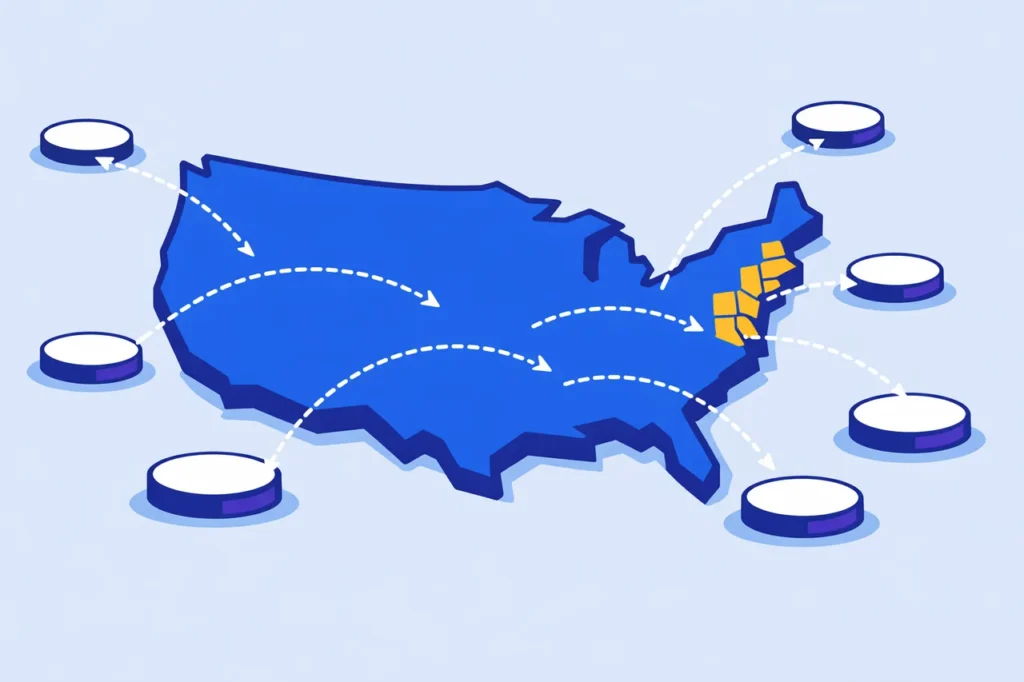
How the two US market segments compare on the terms that determine bonus quality.
| Feature | Nationwide US-facing offshore | State-licensed (7 states) |
|---|---|---|
| Player access | All 50 US states | CT, DE, MI, NJ, PA, RI, WV only |
| Typical bonus size | $20 to $250 | $10 to $75 |
| Wagering multiplier | 5x to 50x | 1x to 15x |
| Payout rails | Crypto same-day, bank wire 3 to 5 days | ACH, PayPal, debit card 24 to 48 hours |
| KYC at signup | Deferred to first cashout on most operators | Full ID plus SSN last 4 at signup |
| Software providers | RTG dominates, Betsoft and Rival secondary | IGT, Evolution, NetEnt, Light and Wonder |
State-licensed offers are cleaner on wagering because regulators cap terms; offshore offers are larger because operators compete on headline size for nationwide acquisition.
What Q3 2026 looks like
Q3 2026 saw a marked shift toward crypto-first payout rails, with Bitcoin, Litecoin, and USDT now standard across most US-facing offshore operators. Same-day cashout timings on verified accounts became the norm rather than a differentiator. Bank wire remains available for players preferring traditional rails but settles in three to five business days rather than the sub-24-hour crypto benchmark. Maine passed enabling legislation for a regulated online casino market with launch upcoming, which would extend the state-licensed segment to eight states through 2027.
The Realtime Gaming Software Network Effect
Eight of the ten US-facing casinos on our shortlist run the same Realtime Gaming software stack under the hood. This is not a coincidence. Realtime Gaming has been the dominant platform provider for US-facing offshore operators for over two decades because it never accepted US regulator jurisdiction, and it built a game catalog specifically tuned for the wagering-clearance patterns typical of US no deposit promotions.
How to identify an RTG-network operator
| Footer software attribution | Look for Realtime Gaming or RTG named in the footer software-provider list |
|---|---|
| Signature slot titles | Bubble Bubble series, Cash Bandits, Achilles, Naughty or Nice progressive line |
| Game lobby layout | Distinctive game-thumbnail styling and rollover animations shared across all RTG operators |
| Sister-brand identification | Some operator groups run three or four RTG casinos under different names sharing back-end infrastructure and payout systems |
What the shared network means in practice
Slot titles behave identically across RTG operators. A 96 percent RTP slot at Casino Extreme runs the same math as the same title at Casino Brango or Yabby, with identical hit frequency and identical volatility. Skill and game preference transfer 1 to 1 across sister brands. Wagering-clearance strategies you learn at one RTG operator apply directly at the next. This makes it worthwhile to run through multiple RTG-network operators sequentially rather than trying to master different platforms.
How We Rate And Vet No Deposit Bonus Casinos
Every operator on the shortlist above passes a consistent five-point vetting process before publication. The scoring weights payout reliability and terms clarity above promotional generosity, because a large no deposit bonus from an operator that does not honor cashouts is worth less than a modest bonus from one that does.
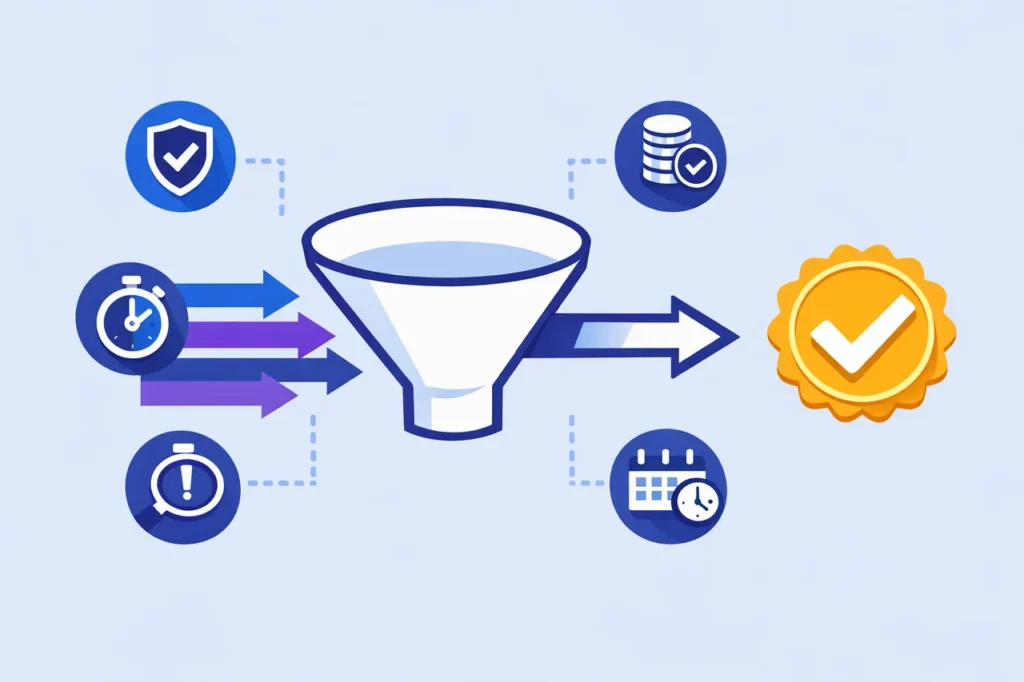
Our five-point vetting criteria
How each operator is evaluated before making the shortlist.
-
License verification against issuing regulator
License number cross-referenced against the issuing authority’s active-license list (Curacao, Anjouan, Kahnawake, MGA). Operators using inactive, revoked, or unlisted licenses do not make the shortlist regardless of how established the branding appears.
-
Live payout test with first cashout
A small no deposit bonus is claimed, wagering cleared, KYC completed, withdrawal requested. Successful completion within the operator’s stated payout window is a required criterion for shortlist inclusion.
-
Terms review for hostile voiding language
Terms document reviewed for broad discretionary voiding clauses, unusual max-bet caps designed to fail, and excluded-games lists structured to void bonuses. Operators with hostile terms language are excluded even when license and payout check out.
-
KYC and verification-friction assessment
KYC requirements are standard (photo ID, proof of address, occasional selfie). Operators that add unusual documentation requirements, reject standard IDs, or take more than 72 hours on typical verification requests get scored down.
-
Ongoing payout monitoring after inclusion
After initial shortlist entry, payout performance is monitored across independent player-report databases. Operators whose payout reports deteriorate over 30-day windows are removed within days rather than left in place to catch traffic on aging content.
Common No Deposit Bonus Traps To Watch For
Most no deposit bonuses are structured to be marketable and playable, but a minority carry terms designed to make the offer effectively unclaimable. The five patterns below account for almost every hostile-terms case we have documented across two years of monitoring US-facing operators.
The deep math behind these patterns is covered in the wagering requirements guide linked above. Any offer showing two or more of these patterns should be skipped even if the headline number is attractive.
Which Player Profile Fits Each No Deposit Format
No deposit bonuses are not equally useful for every type of player. Five player profiles get meaningful value from claiming NDBs, and two profiles are usually better served by other bonus formats. Matching the offer type to the way you actually play is more important than picking the largest headline number.
Player profile matrix
Five profiles NDBs serve well
5
- Casual real-money player testing a new operator before deciding whether to deposit; the try-before-you-buy dynamic works exactly as intended
- Crypto-first player wanting a same-day cashout without funding an account; offshore NDBs pair with instant crypto payouts naturally
- Slot enthusiast who already likes the title a free-spin offer is locked to; the spin allocation delivers real playtime on a game you would have played anyway
- No-KYC-yet player wanting to complete verification once and unlock a small cashable payout; NDBs create a natural onboarding event
- Multi-account bonus hunter running the RTG network sequentially; new-player NDBs at each sister operator produce compounding entry-tier value
Two profiles usually better served by other bonuses
2
- High-roller depositing large amounts anyway; reload bonuses and match-percentage welcome bonuses on the actual deposit produce higher absolute cashable value than a small NDB
- Pure operator-tester wanting a clean vetting run; a small real deposit produces cleaner terms and faster feedback than the wagering-locked NDB path
Using A No Deposit Bonus As A Casino Vetting Tool
The most useful reframe of an NDB is not as free money but as due diligence. A no deposit bonus lets you complete every step of the operator-player interaction (signup, gameplay, wagering, KYC, cashout) with zero of your own money at risk, and see how the operator actually behaves at each step. Every friction point that shows up during the NDB cycle will show up again on your first real-money deposit, only then it matters.
What to watch for during the NDB test cycle
| Signup transparency | Bonus code accepts on first entry, credit lands in the wallet within minutes, terms are clearly linked from the promo page |
|---|---|
| Game contribution accuracy | Slot contribution rates match the terms exactly, no silent excluded games surface during play |
| Support responsiveness | Response to a routine question about the offer within a business day, clear language, no runaround |
| KYC turnaround | Document verification completes within 72 hours of upload, no unusual document requests beyond ID plus proof of address |
| Payout timing | Crypto cashout completes within 24 hours of verification, bank wire settles in three to five business days as stated |
Any operator that fails on two or more of the five test points above is not one you want to deposit at. Operators on the shortlist above have all passed the same test cycle we recommend you run before your first real deposit anywhere.
Deeper Reading From The No Deposit Bonus Library
Six deeper guides cover the mechanics, math, market context, and slot-selection strategy behind everything the shortlist above filters for. Each guide is written to give you enough theory to evaluate future offers independently.

The best no deposit bonus slots shortlist covers which specific titles pair a high published RTP with the low-to-medium variance that suits bonus play. The sweepstakes casinos explained guide covers the two-currency workaround that keeps social casinos outside state gambling law. Together with the mechanics, wagering, calculator, and legality guides referenced elsewhere on this page, the library covers the full picture behind every offer the shortlist recommends.
No Deposit Bonus Frequently Asked Questions
A promotional credit a casino puts in your bonus wallet on signup, without requiring you to fund the account first. The credit can be cash, a set of free spins, or a bonus code that unlocks either. Winnings up to the operator’s cashout cap become withdrawable after you clear the wagering multiplier on eligible games.
Yes, when wagering is cleared and identity verification is complete, winnings up to the cashout cap are cashable to the payment methods the operator supports. The realistic amount is usually the cap value, not any peak balance hit during play. Read the specific offer’s cap before valuing the bonus.
Aggregate customer lifetime value across the pool of players who claim an NDB exceeds the bonus cost per claim. A share never deposit again, a larger share deposit modestly and lose the deposit to house edge, and a small minority both cash out with profit and continue depositing over months. Operators calibrate wagering multipliers to keep the math positive across the pool.
Yes for players in the seven states with regulated online casino markets via state-licensed operators. For players elsewhere, US-facing offshore casinos serve the entire country under Curacao, Anjouan, or Kahnawake licensing. Player-side access to offshore casinos is legal; federal law targets operator conduct rather than individual player use.
Offshore-licensed casinos typically run offers in the $20 to $250 range with wagering multipliers between 5x and 50x. State-licensed operators run smaller offers ($10 to $75) with lower wagering (1x to 15x). Effective value after cap and wagering usually lands between 15 and 40 percent of the headline amount on a well-structured offer.
No. Some casinos credit no deposit bonuses automatically on account creation. Most US-facing offshore operators use codes as their primary claim mechanism. Check the offer’s specific claim mechanism before signup and copy the code directly rather than retyping to avoid case-sensitivity errors.
On a $50 NDB with 30x wagering, clearing the required $1,500 in bet volume takes three to five focused sessions. Add one to three business days for KYC verification on first cashout at offshore operators, plus the payout window. Realistic total is four to seven days on a healthy offer.
First-time account creation is the qualification bar for welcome-tier no deposit offers, so usually one per account. Some operators offer separate ongoing NDBs to existing accounts through reload promotions or seasonal offers. Multi-operator claiming across different casinos is standard.
Offshore-licensed operators serve US players nationwide with larger headline offers ($20 to $250) and higher wagering multipliers (25x to 50x). State-licensed operators serve only their seven regulated states with smaller offers ($10 to $75) but much lower wagering (1x to 15x). Effective value after wagering and caps is often comparable across the two segments.